Physical Address
304 North Cardinal St.
Dorchester Center, MA 02124

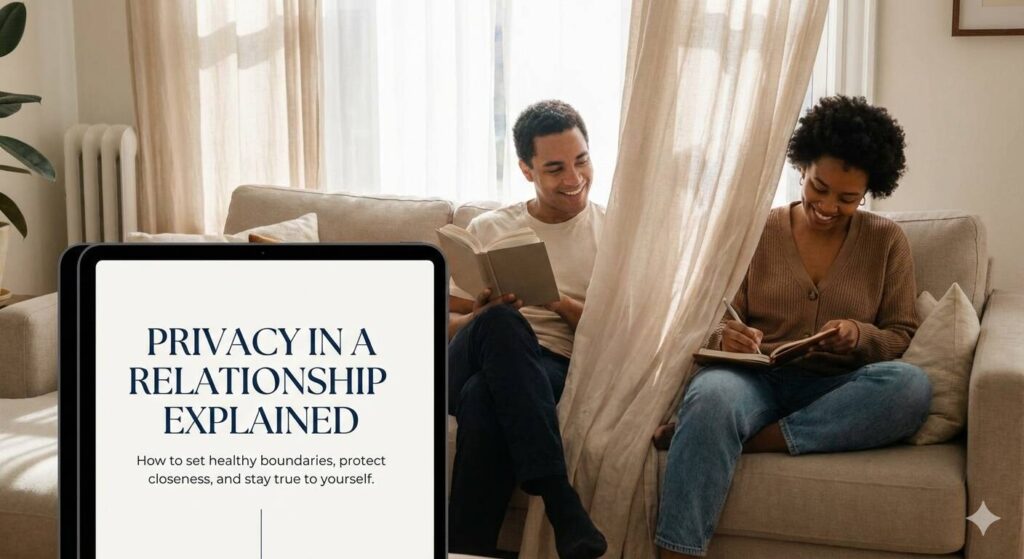
In every intimate connection, closeness feels like the goal—but closeness can quietly turn into overexposure if no one stops to ask where the line is. Privacy in a relationship is one of those topics couples rarely discuss at the beginning, yet it often becomes a turning point later. Not because someone did something “wrong,” but because love sometimes asks for access without realizing it’s asking for too much. Staying close without losing yourself is not automatic—it’s something couples have to learn.
At first, sharing feels effortless. Passwords are exchanged casually. Phones lie face-up on the table. Stories from the past come spilling out late at night. It feels intimate, even romantic.
But slowly, questions change tone.
“Who were you texting?”
“Why didn’t you tell me about this earlier?”
“Why do you need time alone?”
None of these questions sound dangerous on their own. Yet many couples begin to feel an unspoken pressure: if I love you, I should have nothing to hide. That’s often when privacy in a relationship becomes confusing—because intimacy and transparency start to blur.
Most of us didn’t grow up learning how to talk about personal boundaries in love. Movies tell us that soulmates share everything. Social media reinforces the idea that couples should be fully visible to each other—and to the world.
But real life is messier.
Technology makes constant access easy. Read receipts show when someone is “available.” Location sharing removes mystery. Silence becomes suspicious. What used to be personal space now feels like emotional distance.
A friend once described it this way:
“I wasn’t hiding anything, but I felt like I was always being watched.”
That feeling doesn’t come from dishonesty. It comes from a lack of agreed relationship boundaries.
One of the biggest misunderstandings in relationships is confusing privacy with secrecy.
Privacy is about ownership.
Secrecy is about avoidance.
You can choose not to share every thought, every message, every emotion—and still be honest. Emotional privacy allows people to process feelings before sharing them. It protects individuality.
Secrecy, on the other hand, usually involves hiding something that would directly affect the relationship—ongoing contact with an ex, financial deception, emotional infidelity.
Consider two short stories:
Story A:
Lena doesn’t talk about her childhood immediately. When she finally does, she explains she needed time to feel safe. Her partner listens, understands, and doesn’t feel betrayed.
Story B:
Chris deletes messages from someone he once dated “to avoid conflict.” When discovered, it breaks trust—not because of the messages alone, but because of the deception.
The difference isn’t the information. It’s intention.
Few things test trust in relationships more than phones. Is it okay to look? To ask? To expect access?
One couple shared passwords for convenience. Over time, one partner started scrolling “just out of curiosity.” Nothing inappropriate was found—but the trust eroded anyway. The other partner began to feel monitored instead of loved.
Some people want full disclosure. Others prefer selective sharing. Problems arise when one partner treats the other’s past as something to audit rather than understand.
Knowing someone’s history should create empathy, not control.
Jealousy often disguises itself as concern.
“Why do you need them when you have me?”
But isolation is not intimacy. Healthy relationship boundaries allow space for friendships, support systems, and independent emotional worlds.
Wanting time alone doesn’t mean wanting less love. Yet many people feel guilty for asking.
A woman once said:
“I loved him deeply, but every time I wanted a night to myself, I had to justify it.”
That isn’t closeness—it’s emotional negotiation.
Boundary violations rarely start dramatically. They start quietly.
One story doesn’t end happily:
Maya and Tom believed openness meant access. When Tom began checking Maya’s phone “for reassurance,” she initially agreed—thinking love required compromise. Over time, she felt smaller. Conversations became defensive. Eventually, trust collapsed.
They tried therapy. They tried rules. But once privacy became something that had to be defended, the relationship couldn’t recover.
Effort matters—but respect matters more.
Healthy couples don’t rely on assumptions. They talk—sometimes awkwardly—about what privacy means to them.
Not rules. Conversations.
“I want to share my thoughts, but I also need time to understand them first.”
“I don’t need access to your phone to trust you.”
“When I ask for space, it’s not rejection.”
One couple learned this the hard way. After months of tension over constant checking-in, they finally talked honestly. The solution wasn’t more transparency—it was more choice.
When sharing became voluntary again, intimacy returned.
This is where emotional privacy strengthens love instead of threatening it.
Not every relationship survives these conversations.
Sometimes, discussions about privacy reveal deeper incompatibilities. One partner may need constant reassurance. The other may need independence to function emotionally.
Ending a relationship after recognizing this isn’t failure. It’s clarity.
Compatibility isn’t just about attraction or values—it’s about how much space two people can give each other without fear.
Ironically, respecting privacy often strengthens trust in relationships.
When people choose to share instead of being required to, sharing becomes meaningful. When access isn’t forced, honesty feels safer.
Privacy says:
“I trust you to be yourself—even when I’m not watching.”
That kind of trust lasts longer than surveillance ever could.
Staying close doesn’t mean dissolving into another person. It means walking beside them—intact.
Healthy relationships allow room for:
Closeness should feel grounding, not consuming.
In the end, privacy in a relationship isn’t about distance or secrecy—it’s about respect. It’s about understanding that love doesn’t require full access to remain real. The strongest connections aren’t built on constant visibility, but on mutual trust, clear boundaries, and the freedom to remain whole.
If love asks you to disappear, it’s asking for too much. But when love allows you space—and chooses you anyway—that’s where intimacy truly lives.