Physical Address
304 North Cardinal St.
Dorchester Center, MA 02124

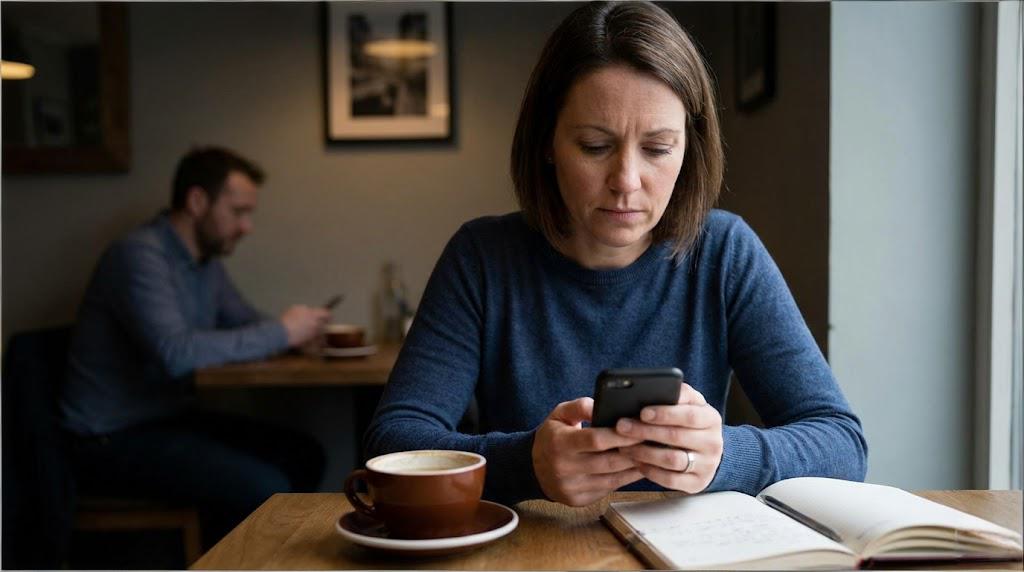
Attraction while married rarely announces itself loudly. It does not arrive with dramatic confessions or obvious betrayal. More often, it slips into ordinary moments—a conversation that lingers a second too long, a message reread more than once, a sudden awareness that someone else sees you in a way you had forgotten was possible. These moments are quiet, private, and deeply unsettling precisely because they happen inside an otherwise stable life.
Marriage is supposed to be the place where desire rests, where choice replaces longing. Yet human emotions are not governed by contracts. Feeling drawn to someone else after marriage does not automatically mean disloyalty, nor does it mean a marriage has failed. What matters is not the feeling itself, but how we understand it—and what we choose to do once we recognize it.
No one plans to feel attracted to someone outside their marriage. It often happens during times that seem emotionally neutral: a work project, a shared joke, a routine encounter. There is no conscious intention, only a subtle shift in attention.
At first, it feels harmless. A spark of interest, a sense of ease. Something light. But attraction has weight, even when we pretend it does not. It invites questions we did not expect to ask.
Why do I feel more like myself around this person?
Why does this conversation feel easier than the ones at home?
These questions are not accusations. They are signals.
Marriage does not erase the parts of us that respond to novelty, affirmation, or emotional resonance. It simply asks us to manage them with greater awareness.
Many people experience attraction while married not because they want to leave, but because something within them wants to be felt again. Marriage can be loving and secure while still being quiet, predictable, or emotionally distant in small ways.
This is where the idea of marriage and temptation becomes misunderstood. Temptation is often framed as weakness, but more often it is information. It tells us what we are hungry for—not necessarily what we should consume.
Sometimes it is appreciation.
Sometimes it is curiosity.
Sometimes it is the feeling of being seen without history attached.
One of the most damaging beliefs around attraction is that feeling it is already a form of betrayal. This belief creates shame, and shame encourages secrecy rather than clarity.
Feeling drawn to someone is not a choice. Acting on it is.
There is a crucial emotional space between noticing attraction and engaging with it. In that space, reflection lives. So does responsibility.
A woman once described it like this:
“I didn’t want him. I wanted the version of myself I felt when I talked to him.”
That distinction matters.
Emotional boundaries in marriage are not about avoiding all connection with others. They are about protecting the emotional center of the partnership.
Boundaries begin to blur when:
None of these moments are dramatic. That is what makes them dangerous.
Emotional closeness rarely breaks a marriage overnight. It drifts. One conversation becomes a pattern. One message becomes a habit. And slowly, emotional intimacy is relocated.
This is often how emotional infidelity begins—not with intention, but with redirection.
Not every marriage experiencing attraction from the outside is unhappy. Many are simply tired.
Long-term partnerships are built on repetition: shared routines, shared responsibilities, shared fatigue. Over time, novelty fades, not because love disappears, but because life demands consistency.
Attraction often emerges during these quiet phases—not because the marriage is wrong, but because something within the individual is undernourished.
A man once reflected:
“I realized I wasn’t trying to leave my marriage. I was trying to escape feeling invisible.”
Attraction, in these moments, is less about the other person and more about the mirror they hold up.
When we talk about marriage and temptation, we often imagine a moral battle. But temptation is not always about desire—it is about contrast.
Contrast between:
Temptation becomes dangerous when it is romanticized or denied entirely. Both responses remove agency.
Acknowledging attraction without feeding it is an act of emotional maturity, not suppression.
This is one of the most difficult questions people face when experiencing attraction while married. There is no universal rule.
Honesty is not the same as disclosure. Sometimes telling your partner is an invitation to reconnect. Other times, it is a way of easing your own guilt at the cost of their emotional safety.
Questions worth asking before speaking:
Silence is not always dishonesty. Sometimes it is responsibility.
Emotional infidelity is not about friendship or warmth. It is about emotional displacement.
It occurs when:
The damage of emotional infidelity lies not in physical acts, but in divided loyalty.
She noticed herself waiting for his messages. She did not respond immediately anymore. Eventually, she asked to be reassigned at work.
“It wasn’t dramatic,” she said. “But it was honest.”
The attraction faded once it was no longer fed.
He told his wife—not about the person, but about the distance he felt within himself. They did not talk about the attraction directly, but about the emptiness it revealed.
It was painful. It was slow. But it was real.
For her, the attraction exposed something deeper. Her marriage had been emotionally over for years. The new feeling did not cause the ending—it clarified it.
Not all endings are betrayals. Some are acknowledgments.
Instead of asking “Is this wrong?”, consider asking:
Attraction is a signal, not a command.
Integrity is not about perfection. It is about alignment.
Sometimes integrity means recommitting.
Sometimes it means redefining boundaries.
Sometimes it means recognizing that a relationship has already ended emotionally.
What it never means is pretending not to feel.
Attraction while married does not make someone immoral—it makes them human. What defines character is not the presence of desire, but the presence of awareness. When we slow down enough to listen to what attraction is actually telling us, we gain the power to choose rather than react. And in that choice, we protect not only our marriages, but our sense of self—even when attraction while married remains one of the quiet moments no one talks about.